
Project Spotlight
Project Spotlight – Study on Risk of Long COVID in type 2 Diabetes: A Nationwide Population-Based Cohort Study
24 July 2026
This collaboration brings together researchers from the CADENCE¹ and PREPARE² programmes to investigate the association between prior SGLT2 inhibitor and metformin use and the risk of long COVID in people with type 2 diabetes. It highlights how TRUST enables researchers across different national programmes and clinical domains to work together to address important healthcare questions.
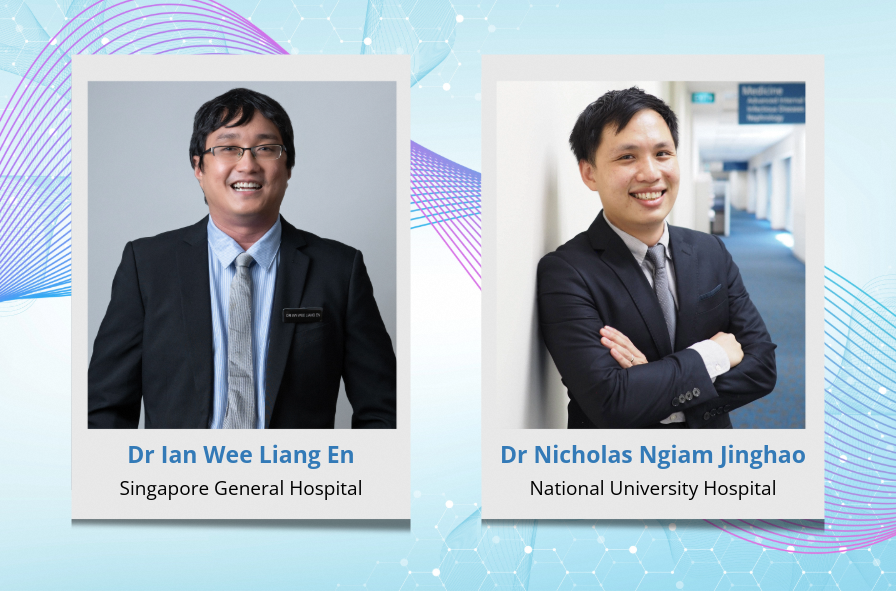
In this feature, Dr Nicholas Ngiam and Dr Ian Wee share more about the study and the collaborative effort behind it. We also thank Dr Russ Li for coordinating this interview.
Patients with type 2 diabetes are among those most vulnerable to long COVID, a condition that can lead to prolonged illness, increased healthcare needs, and poorer long-term health outcomes. By analysing data from over 71,000 diabetes patients with COVID-19 using Singapore's national healthcare databases through the TRUST platform, this study examined whether two widely used diabetes medications – SGLT2 inhibitors and metformin – offer protection against long COVID. The findings generate valuable real-world evidence that could inform clinical decision-making, support evidence-based prescribing, and ultimately improve the care and recovery of patients at elevated risk of long COVID.
1. What motivated your team to look into whether common diabetes medications could affect a patient's risk of developing long COVID?
We were interested in this study because people with type 2 diabetes are known to be at higher risk of complications after COVID-19, including long COVID. At the same time, medications like metformin and SGLT2 inhibitors are commonly used and may have benefits beyond glucose control, including effects on inflammation, cardiovascular health, and metabolism. We wanted to see whether these everyday medications might also influence the risk of post-COVID complications in a real-world population.
2. How do you hope these findings will shape the way diabetes patients are managed, especially as COVID-19 continues to circulate?
While we do not think these findings should directly change how diabetes medications are prescribed at this stage, they add to the growing understanding that long COVID is likely influenced by several metabolic, inflammatory, cardiovascular, and neurological pathways. As COVID-19 continues to circulate, we hope this work encourages clinicians and researchers to think more broadly about how good chronic disease management, including diabetes care, may affect recovery after acute infections.
3. Could you briefly walk us through how the study was conducted and how you identified long COVID outcomes in patients?
We used nationwide anonymised health data to identify people with type 2 diabetes who had COVID-19 and compared those who had been on metformin or SGLT2 inhibitors with those who had not. We then looked at new medical diagnoses and symptoms recorded after the acute infection period, from about one month up to approximately ten months after COVID-19. These included cardiovascular, neurological, respiratory, psychiatric, and other post-COVID outcomes commonly used to study long COVID.
4. What were the key findings of the study, and were there any results that stood out or surprised your team?
We found that prior use of metformin and SGLT2 inhibitors was associated with a lower risk of some post-COVID complications in people with type 2 diabetes. Metformin was linked to a lower risk of overall post-acute outcomes and symptoms, while SGLT2 inhibitors were particularly associated with a lower risk of neurological outcomes, including memory and cognitive problems. The neurological signal with SGLT2 inhibitors stood out to us, as this is an area where there is still much to understand about long COVID. What was even more interesting was that when both agents were used together, the benefit appeared to be even more pronounced.
5. You found that patients on both medications together seemed to benefit even more. What does this mean in practical terms for patients and their doctors?
In practical terms, this does not mean that patients should be started on these medications solely to prevent long COVID. Rather, it is reassuring that medications already commonly used for type 2 diabetes, and which have established benefits for cardiovascular, kidney, and metabolic health, may also be associated with better post-COVID outcomes. For doctors, it reinforces the importance of optimising evidence-based diabetes care, while further studies are needed to understand whether these medications have a direct protective effect against long COVID.
6. Why did you choose to use the TRUST platform for this study, and what made it the right fit for research of this scale?
This study required linkage and analysis of large-scale national datasets across COVID-19 infection records, diabetes medication use, vaccination status, and healthcare outcomes. TRUST was a good fit because it provided a secure environment where these datasets could be brought together and analysed responsibly, while maintaining strong data governance and patient confidentiality. For a nationwide study, that infrastructure was essential.
7. What advice would you give to fellow researchers who are keen to use the TRUST platform for their own studies?
Our advice would be to start with a clear research question and think carefully about what data elements are needed to answer it. TRUST is especially useful for studies that require linkage across different datasets, but the analysis is only as strong as the study design and definitions. It is also helpful to engage the TRUST team early, so that feasibility, data availability, and governance requirements can be worked through from the start.
¹ CArdiovascular DiseasE National Collaborative Enterprise (CADENCE)
² Programme for Research in Epidemic Preparedness and REsponse (PREPARE)
The full research team also includes Enoch Xueheng Loy, Matthew Chung Yi Koh, Calvin J. Chiew, Russell Jingxian Li, Su Chi Lim, E Shyong Tai, Yong Mong Bee, Wai Leng Chow, David Chien Boon Lye, Yew Woon Chia, Mark Yan Yee Chan, Derek John Hausenloy and Kelvin Bryan Tan.